The Evolution of Individualization in Football Training: From Generalized to Player-Specific Approaches


Introduction
Modern football has undergone a profound transformation in how players are developed and maintained. The shift from one-size-fits-all training methods to highly personalised programs represents one of the most significant advances in the application of sports science. This evolution—from general training to positional specificity, and ultimately to complete individualization—has fundamentally changed how elite clubs approach player development, performance optimisation, and career longevity.
The Historical Progression: Three Eras of Training Philosophy
Era 1: The General Training Approach (Pre-2000s)
Traditional football training operated under a collective model in which entire squads performed identical sessions. The underlying assumption was simple: all players required similar physical attributes—endurance, strength, and speed. Training sessions focused on building a baseline fitness level across the team, with minimal consideration for the vastly different demands placed on a midfielder compared to a striker, or a central defender compared to a winger.
This approach had clear limitations. A central midfielder covering 12 kilometres per match has fundamentally different energy system requirements than a striker performing repeated explosive actions. Recovery needs, injury risks, and performance markers varied significantly across the squad, yet training remained largely uniform.
Era 2: Positional Specificity (2000s–2015)
The introduction of GPS tracking and match analysis software in the early 2000s revealed substantial differences in physical demands across positions. Data showed that full-backs performed more high-intensity running than centre-backs, that wingers required different acceleration profiles than central midfielders, and that each position carried unique metabolic and mechanical loads.
This evidence drove the shift towards positional training. Clubs began separating players by position for specific components of training sessions. Defenders focused on aerial duels and positional play, midfielders on repeated high-intensity efforts with short recovery periods, and forwards on explosive movements and finishing under fatigue.
Positional training marked a significant improvement, recognising that a team is composed of specialists rather than interchangeable parts. However, it still grouped players within positions, failing to account for individual variation in physical capacity, injury history, biomechanics, and playing style.
Era 3: Player-Specific Individualization (2015–Present)
The current paradigm recognises that even players in identical positions possess unique characteristics that demand tailored approaches. Two central midfielders may share the same positional label, yet one might possess superior aerobic capacity with limited explosive power, while the other excels in high-intensity bursts but requires more aerobic development. Their training, recovery, and injury prevention strategies should reflect these individual profiles.
Technology has made this level of personalization feasible. Wearable sensors, force plates, metabolic testing, genetic profiling, and advanced analytics now provide detailed individual profiles. Sports science departments can design truly bespoke programmes that optimise each player's potential while managing their specific vulnerabilities.

Key Areas of Individualization
1. Performance Enhancement
Performance development has moved beyond simply making players “fitter.” Modern approaches target specific capacities based on detailed profiling.
Metabolic Conditioning
Individual aerobic and anaerobic thresholds determine personalised intensity zones. A player with a high VO₂ max but poor repeated sprint ability requires a different conditioning approach than one with the opposite profile. High-intensity interval training is calibrated to each player’s lactate threshold and recovery kinetics, rather than relying on team-wide percentage-based zones.
Speed and Power Development
Force–velocity profiling identifies whether a player is force-deficient (requiring strength development) or velocity-deficient (requiring explosive training). Two players with identical sprint times may need entirely different interventions based on their mechanical characteristics.
Technical Development Under Fatigue
Players are exposed to individualized technical drills under fatigue conditions that replicate match-specific demands. A box-to-box midfielder may perform passing tasks after high-intensity running blocks, while a deep-lying playmaker trains under sustained aerobic load.
Positional Tactical Load
Cognitive demands are also tailored. Players receive position-specific decision-making training that reflects their tactical roles. For example, a sweeper-keeper requires enhanced spatial awareness and distribution under pressure compared to a traditional goalkeeper.
2. Recovery Individualization
Recovery is one of the most critical areas for personalization, as responses to training load vary considerably between athletes.
Sleep and Circadian Optimisation
Individual chronotypes—whether an athlete is naturally a morning or evening type—influence optimal training times and recovery strategies. Monitoring sleep quality allows practitioners to tailor interventions more effectively.
Nutritional Strategies
Metabolic profiling reveals differences in substrate utilisation. Some players perform optimally with higher carbohydrate intake, while others maintain efficiency with lower levels. Recovery nutrition is therefore individualized in both timing and composition.
Active Recovery Protocols
Heart rate variability (HRV) and wellness data guide recovery prescriptions. Some athletes benefit from light movement, while others require more passive recovery strategies.
Hydrotherapy and Modalities
Responses to recovery modalities such as cold-water immersion vary. Individual testing determines whether interventions provide physiological benefit or primarily psychological support.
3. Injury Prevention
Individualized injury prevention represents the cutting edge of sports science in football.
Biomechanical Screening
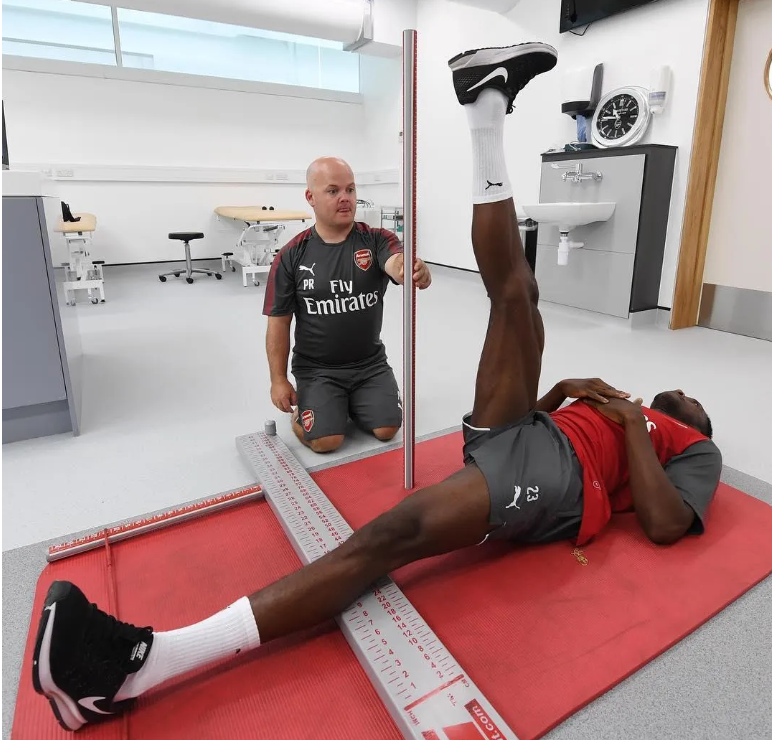
Motion analysis and force plate assessments identify movement inefficiencies and asymmetries. These findings inform targeted corrective programmes.
Load Management
Each player has a unique load tolerance profile. Monitoring systems help detect when an individual approaches high-risk thresholds, even when team averages appear acceptable.
Strength Profiling
Isokinetic and functional testing reveal imbalances and deficiencies, informing targeted strength interventions.
Previous Injury Considerations
Injury history plays a major role in programme design. Players with prior ACL injuries or recurrent muscle strains require ongoing, specific preventative strategies.
Genetic and Physiological Markers
Emerging research suggests that genetic factors may influence injury risk and recovery, although practical application remains limited.
Data Sources for Individual Profiling
Effective player-specific planning depends on comprehensive data collection across multiple domains.
Physical Performance Testing
Aerobic capacity assessments (VO₂ max, intermittent tests)
Anaerobic power and repeated sprint ability
Speed and acceleration profiling
Strength and power assessments
Agility and change-of-direction testing
Biomechanical Analysis
3D motion capture
Force plate assessments
Functional movement screening (while its ability to predict injury remains controversial)
Physiological Monitoring
GPS and accelerometer data
Internal load metrics (heart rate, sRPE, TRIMP)
Heart rate variability
Biomarkers
Psychological and Cognitive Assessment
Wellness questionnaires
Cognitive performance testing
Psychological profiling
Injury and Medical History
Detailed injury records
Medical screenings
Musculoskeletal assessments
Technical and Tactical Data
Match analysis metrics
Position-specific performance indicators
Integration: From Data to Individualized Plans
The challenge is not data collection, but data synthesis. Translating complex information into practical interventions requires:
Interdisciplinary collaboration across departments
Structured periodization frameworks
Continuous monitoring and adaptation
Player education and engagement
Integrated technology platforms
Challenges and Future Directions
Despite significant progress, challenges remain. Data overload can complicate decision-making without clear frameworks. The cost of advanced technologies remains prohibitive for many non-elite clubs. Additionally, balancing individual optimization with team cohesion requires careful planning.
Looking ahead, artificial intelligence and machine learning may enhance decision-making by identifying patterns beyond human capability. Advances in wearable technology and genetic research may further refine personalization strategies.
Conclusion
The progression from general training to positional specificity and finally to full individualization reflects football’s evolution into a science-informed discipline. Modern training approaches are increasingly tailored to each player’s unique characteristics, enhancing performance, reducing injury risk, and extending careers.
However, data alone is insufficient. The true value lies in the ability to translate complex information into effective, practical programmes that align with team objectives. The future of football training lies not in universal methods, but in understanding and optimizing the individual.
This shift—from seeking a single optimal approach to embracing individual variability—represents one of the most important developments in modern football performance.


Comments